Walk-in tub or accessible shower: the comparison nobody selling one will make
A company that sells walk-in tubs will explain why a walk-in tub is the answer. A company that sells shower conversions will explain the opposite. Both are describing real products; neither is describing your bathroom. Here is the comparison without a product attached.
Free, no obligation. We call you back to confirm the details, then, with your OK, your request goes to one qualified local pro who follows up with a written quote.
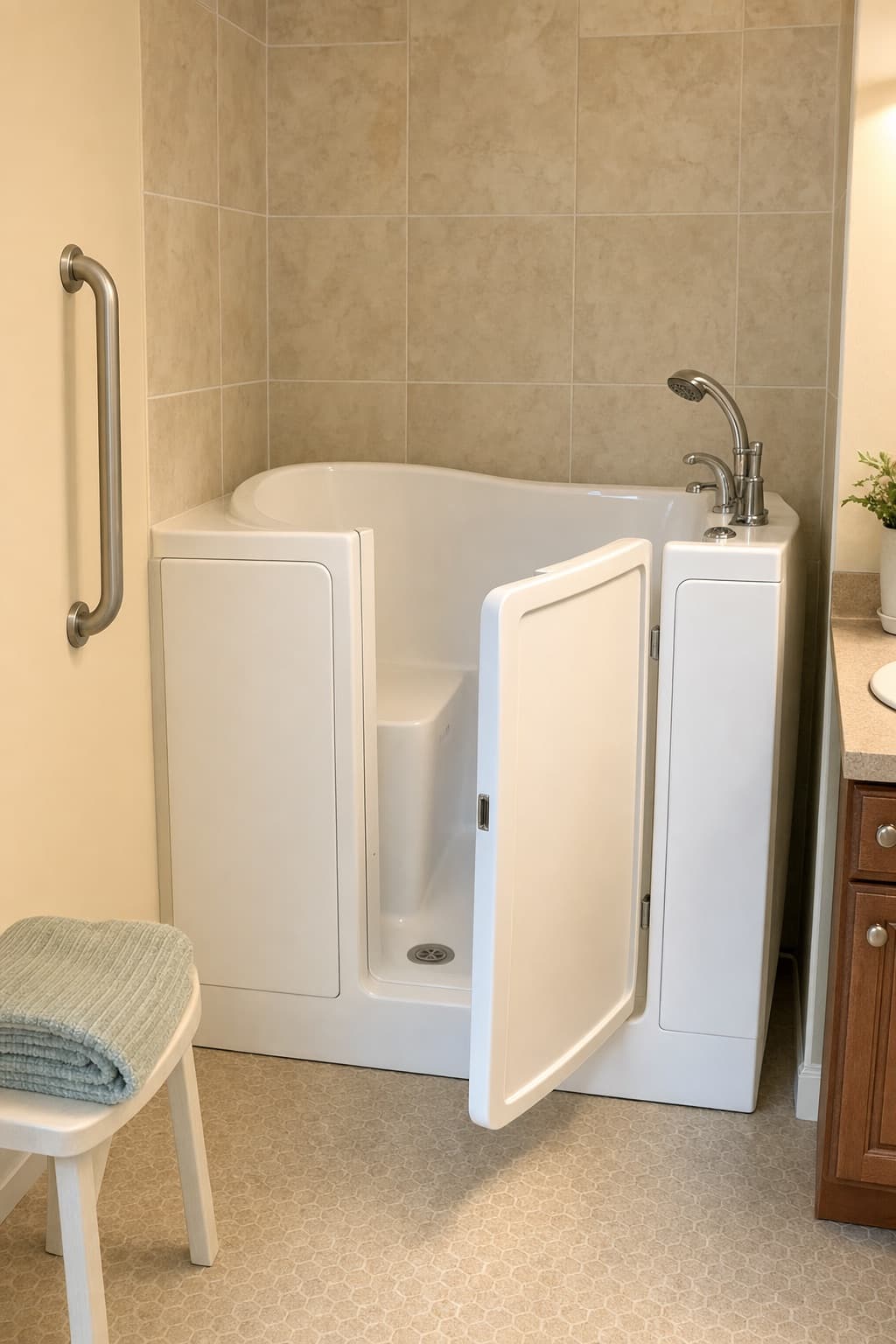
The difference that shows up daily
A walk-in tub is entered through a door in the side, which means stepping over a low sill rather than a high tub wall. It is a bath, so it fills after you are seated and drains before you can get out again.
A low-threshold or curbless shower is walked into and walked out of. There is nothing to wait for, and the water can stop at any moment.
That single difference, waiting while it fills and drains, sitting in the tub throughout, is the thing most buyers only discover after installation. It is not a flaw. For somebody who wants a proper bath and finds getting over a tub wall difficult, it is precisely the point. For somebody who takes a five-minute shower, it is a daily inconvenience they paid for.
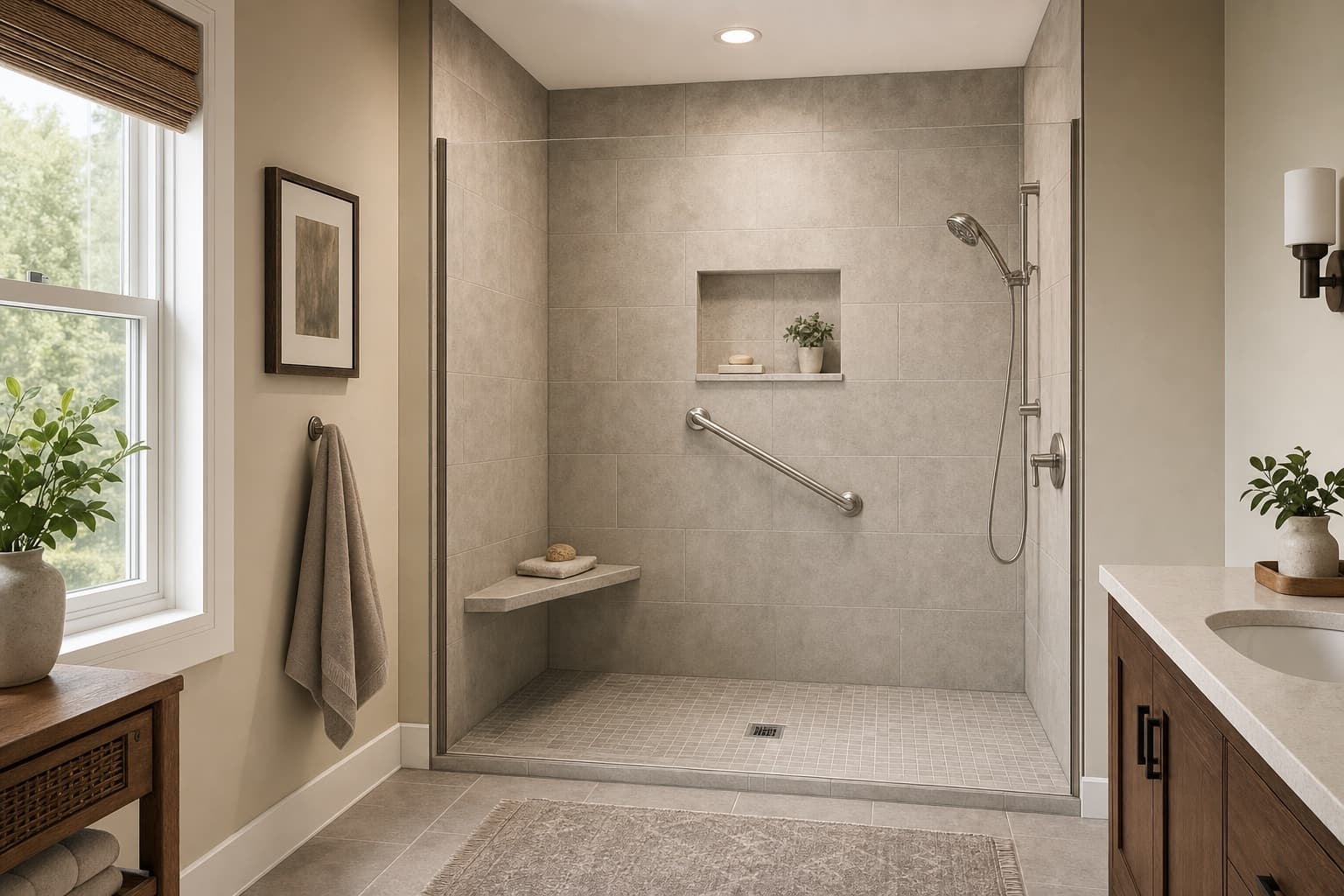
Where each one genuinely fits
A walk-in tub tends to suit
- Somebody who values a full bath and would otherwise stop taking one.
- A household where stepping over a standard tub wall is the specific difficulty.
- A bathroom where the existing tub space is the only place a bathing fixture can go.
- A home with enough hot water capacity to fill it, which is worth checking before anything else.
An accessible shower tends to suit
- Most households, most of the time, which is the sentence this category rarely says out loud.
- Anybody who showers rather than bathes.
- A wheelchair or walker user, or anybody who may become one: a curbless shower can be rolled into.
- Situations where another person helps, because there is room to stand alongside.
- Households planning for needs that will change, since a shower adapts more easily than a tub.
Four questions that usually settle it
- Do you actually want a bath, or do you want to be able to wash comfortably? These have different answers and different products.
- Is waiting while the tub fills and drains acceptable, every time, including in winter?
- Will a wheelchair or walker need to enter the bathing area, now or plausibly later?
- Does the house have the hot water to fill a walk-in tub, and the floor to carry it full?
The fourth is a house question rather than a preference, and it is examined on the installation page. A tub full of water is heavy, and not every floor is indifferent to that.
What neither option does
Neither one prevents falls, and no page on this site will claim otherwise. A bathroom can be made easier and more comfortable to use; whether somebody falls depends on far more than a fixture, and any company promising otherwise is selling something it cannot deliver.
What is fair to say: a bathroom that is easier to use tends to get used more comfortably and more independently, and that is worth money to a lot of households.
The twenty minutes nobody mentions in the living room
A walk-in tub has a door, and the door is watertight only while it is shut. That single fact governs how the bath actually works, and it is the part that decides whether somebody will keep using it after the first month.
You open the door, step over a threshold of roughly three to six inches, sit down, shut the door, and only then does the water start. A standard tub takes something like six to eight minutes to fill, holds fifty to eighty gallons, and takes up to about fifteen minutes to drain. The door cannot be opened until it is empty, because opening it early empties the tub onto the bathroom floor.
None of this makes a walk-in tub a bad product. For somebody who wants to bathe rather than shower, who finds warm water genuinely helps, and who can sit comfortably for that long, it does something a shower cannot do at all. The point is that it is a different daily experience from the one most people picture when a brochure is on the kitchen table, and the difference is not mentioned first.
Two things that come up years later
The door seal is a wear item. It is a rubber gasket doing a hard job on a hinged door, and it is periodically replaced rather than fitted once. Ask what the seal costs, how long the manufacturer expects it to last, whether it is covered, and who comes to change it. A seal that fails quietly is a leak under a floor.
Resale is the other one, and it cuts both ways. A curbless shower reads to a buyer as a modern bathroom, and it appeals well beyond people who need it. A walk-in tub reads as a medical fixture, and it appeals to a narrower group. There is a nuance worth knowing before anybody converts anything: a tub-to-shower conversion adds value most reliably when the house still has another bathtub somewhere, because a house with no tub at all loses a slice of the buyer pool.
Neither point should decide the question on its own. Both belong in it, and neither is going to be raised by somebody who is paid on the tub.
Frequently asked
Which one costs more?
It depends far more on the room than on the product, and no figures appear here. What drives the number is on what drives cost.
Can we have both?
In a bathroom with the space, yes, and in a house with a second bathroom it is often the simplest answer of all: make one fully accessible and leave the other alone.
Do walk-in tubs affect resale?
Opinions vary and it depends on the local market, a question for a local agent rather than for this site. An accessible shower is generally regarded as the more neutral choice, and that is worth weighing if the home may be sold.
Last reviewed July 29, 2026.
Related pages
- AboutKnow who is on the other side.
- Frequently asked questionsFind one short answer.
- Walk-in tub installationUnderstand the installation and its constraints.
- Accessible showerEvaluate the alternative properly.
- Aging in placeDesign once for needs that will change.
- What drives costBudget honestly across options.
Request a written quote before choosing a product
The room, what is in it now, and what would make it easier to use. The pro who quotes it then starts from the room rather than the product, cheaper option included.