September 25, 2026 · 6 min
Walk-in tub installation: what happens between the delivery and the first fill
A walk-in tub is sold as a drop-in replacement, and in a good alcove it is one. Here is the work in the order it happens, so a quote can be read against it stage by stage.
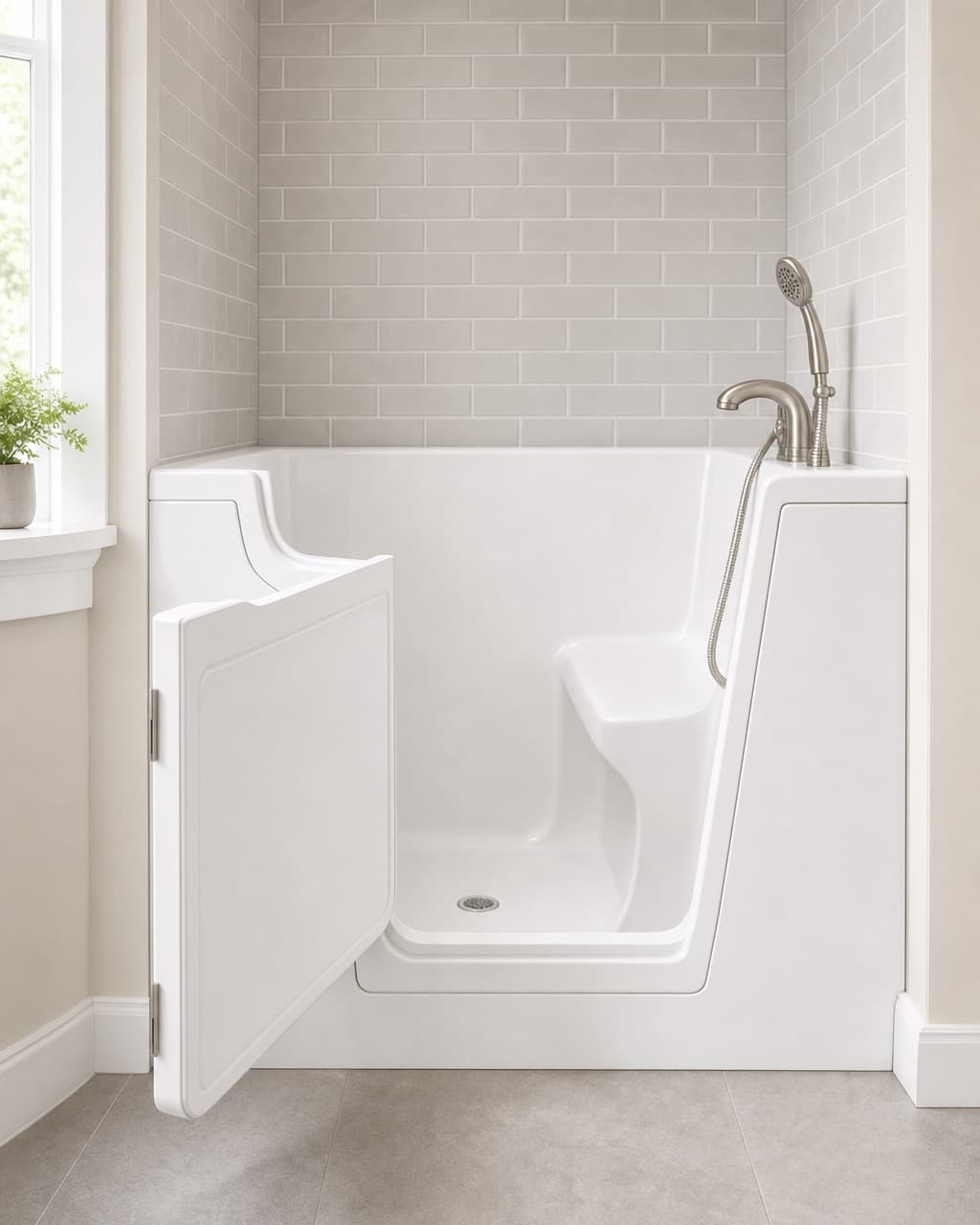
Two thousand four hundred searches a month ask about the installation rather than the tub, and the click costs $18.37 against a competition index of 0.06 at the last pull, which is to say almost nobody is bothering to explain it. The product is sold as a replacement that drops into the alcove the old tub leaves, and in a good alcove that is true. What follows is the work as it actually runs, so a quote can be read against it stage by stage.
Before anything is delivered: the survey
The alcove is measured in three dimensions, because a walk-in tub is usually taller and deeper than the tub it replaces and often shorter, which leaves a gap at one end to close. The door swing is drawn on the floor against the toilet and the vanity. The route from the truck to the bathroom is walked, because the unit arrives as one rigid piece and the bathroom door is the usual pinch point. The water heater is looked at, and the panel is opened if the unit has a pump or a heater. Why each of these matters is set out on the walk-in tub installation page.
Removal of the old tub
Water is shut off, the supply is disconnected at the valve, and the overflow and drain are unhooked from below, through the access panel or the ceiling of the room beneath. The wall finish is cut back to the tub flange, because the old tub was tiled over and cannot come out otherwise. A steel or acrylic tub lifts out in one piece; a cast iron one is broken up where it stands. What the removal leaves is a bare alcove with the drain stub and the supply visible, and this is the first moment anyone can see what the job really is.
What the empty alcove reveals
Damp or soft framing behind the old flange, a floor out of level, a drain stub in the wrong place for the new unit. These are found now, and a quote that said nothing about how findings are handled is about to be renegotiated on the spot. Ask before the work how a discovery is documented, priced and approved, in writing.
Plumbing: the drain and the fill
A walk-in tub drains at one end and fills through its own valve, and both have to meet what is in the floor and the wall. If the existing drain sits at the other end of the alcove from the new unit’s outlet, the floor is opened and the trap moved, which is plumbing rather than fitting. On tubs sold with a fast-drain option the drain assembly is the part that delivers it, so confirm that the option ordered is the option fitted. The fill valve is connected to hot and cold supplies that can actually deliver the flow it was designed for; an old half-closed shut-off behind the wall is the commonest reason a new tub fills slowly.
Electrical, where the unit needs it
A soaker with no pump needs nothing. A unit with air jets, water jets, an inline heater or a heated seat needs a circuit of its own with ground-fault protection, run from the panel by an electrician, and the connection point has to remain reachable after the tub is boxed in. This is the stage most often left out of a price given from a brochure, which does not know where the panel is.
Setting the tub, then the door and the seal
The unit is set on a base that carries its weight evenly, levelled in both directions, and fixed at the flange to the studs. Level matters more here than on an ordinary tub, because the door seal only closes evenly on a frame that has not been twisted by an uneven floor. The door is then adjusted: the latch and the hinge are set so the seal compresses by the same amount along its whole length, and a seal that is tight at the top and loose at the bottom is an installation fault rather than a product fault. What the door changes for the person using the tub is covered in the article on the door itself.
Closing the walls and the gap
The wall finish is rebuilt down to the new flange, either in tile or in a surround supplied with the unit, and the end gap is closed with an extension panel or a built and tiled ledge. The panel that gives access to the pump, the drain and the valve is fitted so that it can be removed again, because the door seal is a wearing part and the drain will one day need a hand on it.
The first fill is the test, and you should watch it
With the door closed and latched, the tub is filled to the overflow while someone watches the seal from inside the room and the drain from below or through the access panel. Then it is drained with a watch running, so the drain rate is known rather than assumed. Nothing is signed off until this is done, and a firm that leaves before the first fill has skipped the only stage that proves the rest. What a serious installer’s paperwork looks like is set out in the article on judging an installer.
Have the sequence quoted, stage by stage
Tell us what is in the alcove now and we will say which of these stages your bathroom needs before there is a figure.