July 30, 2026 · 7 min
Walk-in tubs: what the door actually changes
The door is the whole product. Understanding what it does, and what it costs you in exchange, decides whether this is the right purchase for your bathroom.
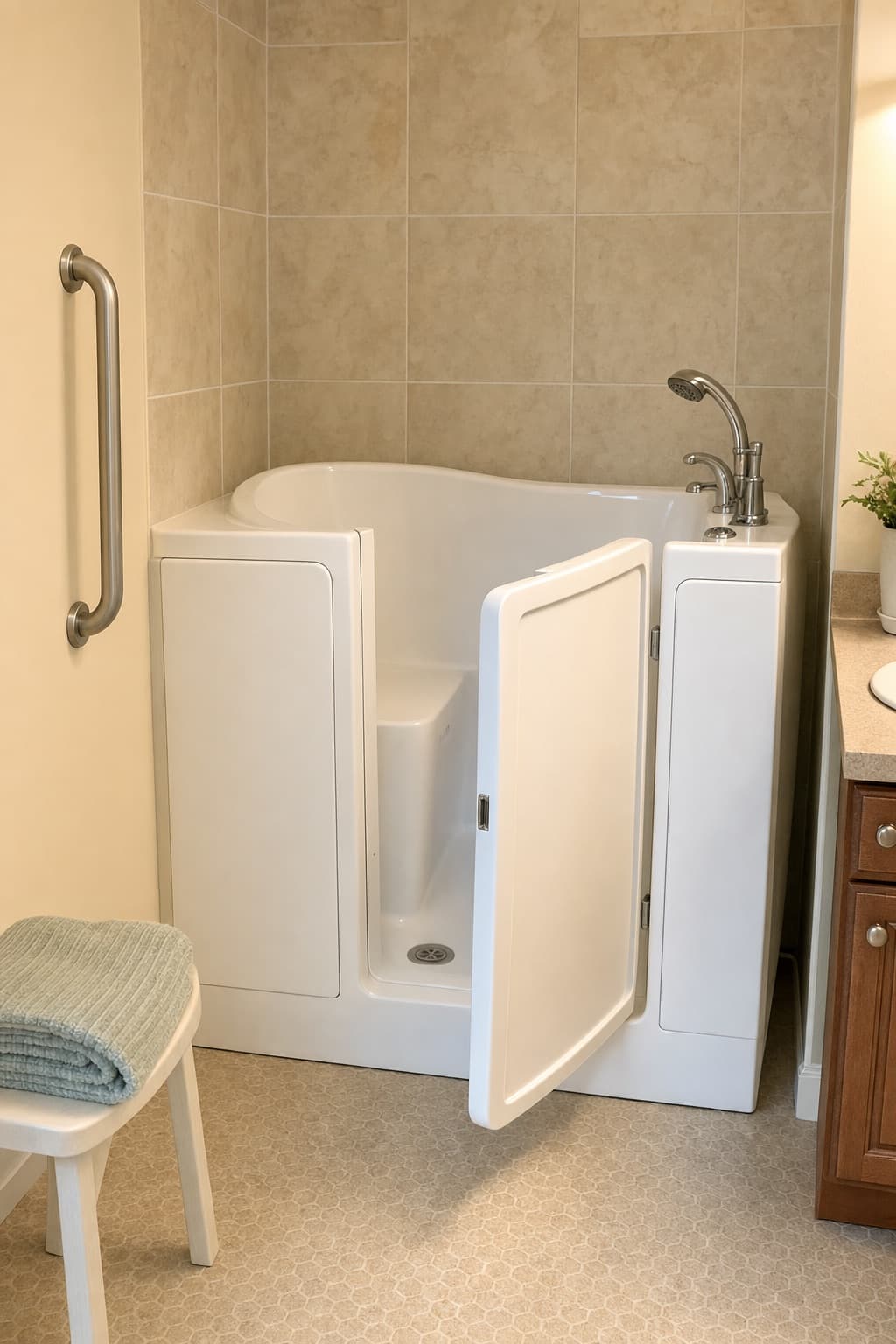
A walk-in tub is a bathtub with a watertight door in its side. You open the door, step over a threshold of a few inches instead of climbing over a wall of fifteen or more, sit down, close the door, and then the tub fills. When you are finished it drains, and only then does the door open again.
That last sentence is the one worth reading twice, because it is the trade-off nobody selling these mentions first.
You sit in it while it fills, and again while it drains
The door cannot open against a full tub. So the sequence is: get in dry, close the door, wait while it fills, bathe, then wait while it drains before you can get out. Depending on the fill and drain rates of the unit and the water pressure at the house, that is a real amount of time sitting in an empty or emptying tub.
Two things reduce it, and both are worth asking about specifically rather than accepting a general reassurance: a fast-fill valve and a high-capacity drain. They change the experience more than any other option on the price list.
The seat height is the accessibility decision, not the door
Most walk-in tubs seat you upright on a moulded seat around seventeen inches from the floor, which is roughly chair height. For someone who finds getting up from a low chair difficult, that seat is the feature that matters. For someone who cannot transfer from standing to sitting unaided at all, the door does not solve the problem and a curbless shower with a seat usually does.
This is the single most common mismatch we see: the tub was chosen for the door when the difficulty was actually the sitting.
What it does to the room
- Walk-in tubs are typically deeper and taller than a standard tub, and often no longer. They frequently drop into an existing alcove, which is why they are sold as a replacement rather than a remodel.
- The door swings, usually inward. That swing needs clear floor space, and in a small bathroom it can conflict with the toilet or the vanity. Measure it, along with the doorway and the turning space.
- Filling a deeper tub uses more hot water. If the water heater is already marginal, this is where you find out.
- The unit needs its own drain and overflow connections and, on most models, power for the pump and the heated seat.
Who a walk-in tub genuinely suits
Someone who wants to bathe rather than shower, can sit down and stand up from chair height, finds stepping over a tub wall the specific obstacle, and has a bathroom where a shower conversion is impractical. That is a real set of people, and for them this is a good product. Someone who wants to shower in it as well is looking at a combination unit and its compromises.
Someone who showers, who needs a caregiver present, or who may use a walker or a wheelchair within a few years is usually better served by removing the tub entirely, which is a conversion with six stages on site. The comparison, side by side, is on tub versus shower.
What a high-pressure visit looks like, so you can recognize one
This category has a reputation, and it is earned. The pattern is consistent: a long in-home appointment, a price presented only at the end, a discount that expires when the salesperson leaves, financing paperwork produced on the spot, and a reluctance to leave a written quote behind.
A written quote you can read alone, sleep on, and show to someone else is not an unusual request. It is the minimum, and it is the first item on the checklist for judging an installer. Ours is written before anything is signed and it does not expire the same day.
Have the room looked at before choosing a product
We will tell you if a walk-in tub is the wrong answer for your bathroom. That happens often.
Senior Bath Quote converts bathtubs to curbless showers, installs walk-in tubs, and fits grab bars and other safety modifications. One written quote, no same-day discount, no in-home close.