August 3, 2026 · 5 min
Installing grab bars: the anchoring is the whole job
A grab bar is a simple fitting with one demanding requirement. What it is fixed to matters more than what it is made of.
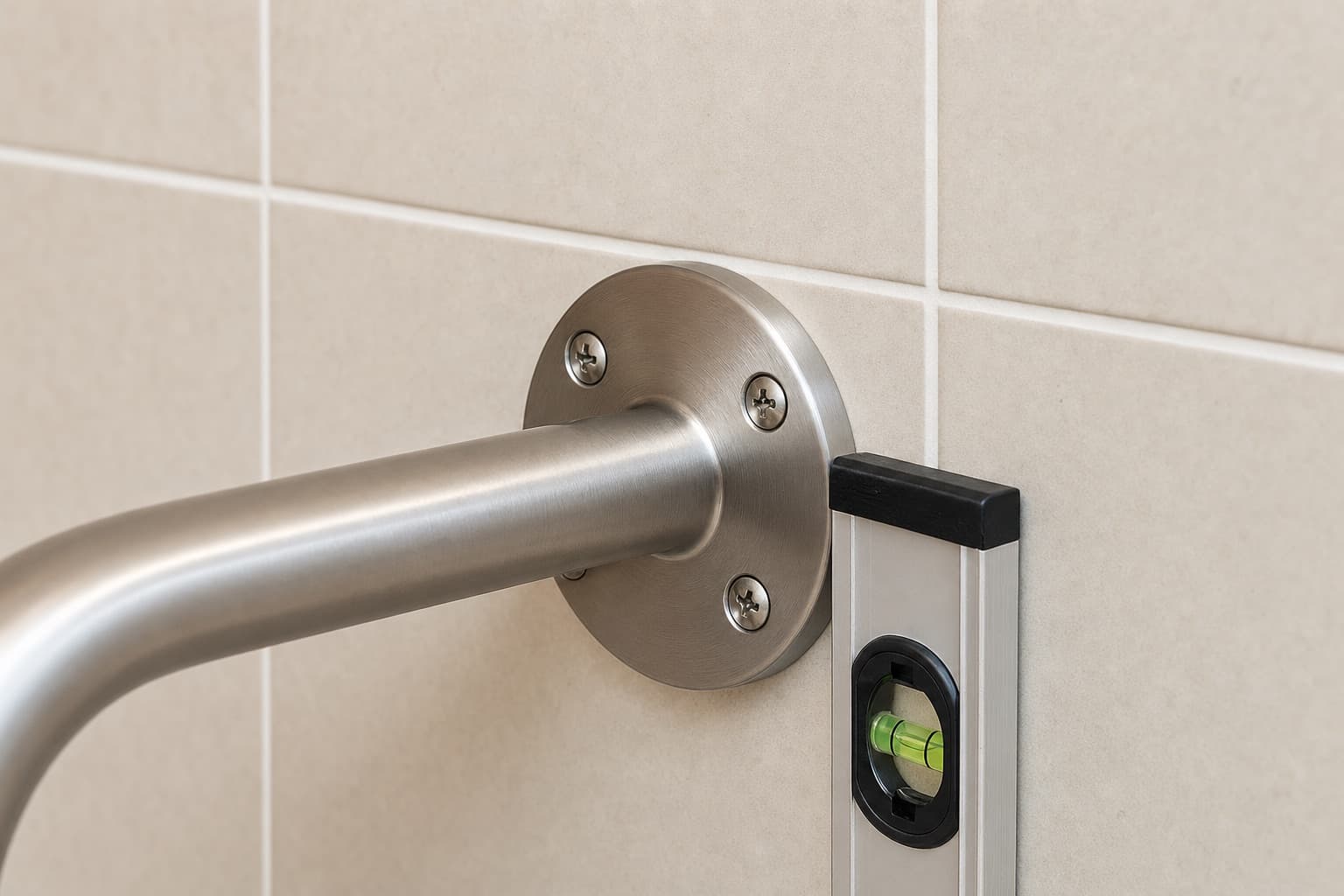
Three thousand six hundred searches a month for the installation rather than the product, which tells you people have understood the important part: a grab bar is only as good as what it is screwed into.
What it has to be fixed to
A bar that is going to be leaned on hard has to reach either a stud or solid blocking installed between studs. Fixing into tile and drywall alone, with plastic or toggle anchors, produces a bar that feels firm on the day and lets go later. There is no anchor that makes drywall behave like timber.
In an existing bathroom the studs are rarely where the bar needs to be. A shower built from the substrate up avoids the problem entirely, because blocking goes in while the wall is open. Retrofitting into a finished room leaves three honest routes:
- open the wall, install blocking between the studs, close it up and retile. Most work, best result, and the only option that puts the bar exactly where it is wanted;
- fit a proprietary backing plate designed to spread the load across a wider area of the wall, where the manufacturer’s instructions permit it in that construction;
- accept the stud positions and place the bars where the studs are, which sometimes works and sometimes puts the bar somewhere nobody will reach for.
If a bathroom is being retiled anyway, blocking is nearly free at that moment and expensive afterwards. It is worth installing it for bars that are not needed yet, which is why the order a remodel is done in decides so much of what it costs.
Where they go is decided by watching, not by a diagram
The useful positions are the ones a hand already reaches for. The place someone steadies themselves getting into the shower, the place they push up from at the toilet, the place they grab at the door. Those are visible in thirty seconds of watching and are not always where a standard drawing puts them.
A vertical bar helps with standing up and sitting down. A horizontal bar helps with steadying while moving sideways. An angled bar is a compromise between the two and is frequently the wrong answer chosen because it looks like both.
What we do not claim
We will not tell you that a grab bar prevents a fall. It is a fitting you can hold, fixed to something that will not move. What that is worth in a given home is not a statistic we are entitled to quote at you. Dimensional standards, where they apply, are covered under safety upgrades, and how far the ADA numbers bind a private home is worth settling before copying them.
What to check when it is finished
- Pull on it hard, in the direction it will actually be pulled.
- Look at the fixings: through-bolted or into blocking, not into an anchor in tile.
- Check the finish is not slippery when wet, which some polished bars are.
- Ask what the wall behind it now looks like, and get it in writing.
Have the bars placed where they will be used
Position first, anchoring second, finish third. We survey the wall before quoting a single bar.
Senior Bath Quote converts bathtubs to curbless showers, installs walk-in tubs, and fits grab bars and other safety modifications. One written quote, no same-day discount, no in-home close.