October 30, 2026 · 6 min
The linear drain in a curbless shower: why it is so often chosen
A long, narrow drain along one edge lets the floor slope in a single plane. That changes the tile, the threshold and how the floor feels underfoot.
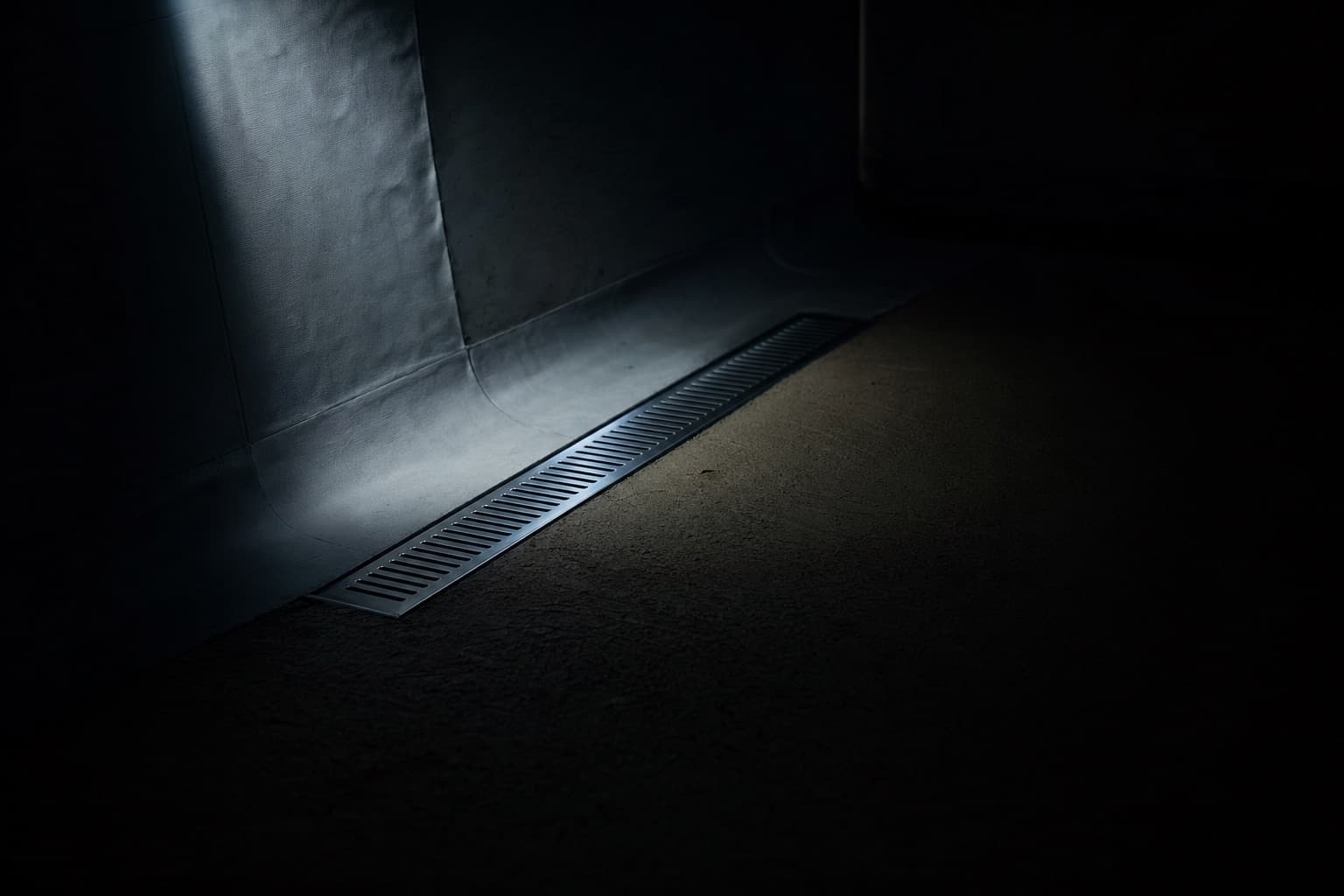
A linear drain is a long, narrow channel set into the floor, usually along the back wall of the shower or across its entrance. In a curbless shower it has become the common choice, not because it looks modern, though it does, but because of what it does to the shape of the floor.
One slope instead of four
A central drain needs the floor shaped like a shallow funnel, sloping toward the drain from all four sides. A linear drain needs the floor to slope in one direction only, like a gently tilted plane. A single plane is simpler to build accurately, and it leaves the rest of the bathroom floor flat right up to the shower.
What that does to the tile
A funnel shaped floor needs small tiles, or tiles cut along the lines where the planes meet, to follow the changing slope. A single plane can take large format tiles laid without diagonal cuts. That is a visual difference, and also a practical one: fewer grout lines are fewer places for water to sit.
Where it goes
Along the back wall is the most common position: the floor slopes away from the entrance, so water runs away from the rest of the room. Across the entrance is sometimes used to catch water at the boundary, but then the slope runs toward the room, and the design has to make sure water reaches the drain rather than passing it. The decision is made with the layout of the whole floor, as described in the article on the curbless floor.
Depth and connection
A linear drain body needs depth below the floor and a connection to the drain line, which on a slab or a timber floor has to be planned with the lowering of the structure. Its outlet has to line up with the drain pipe or be connected to it with the right fall. These are details settled before the floor is closed, as set out in the installation article.
Waterproofing around it
The membrane has to be bonded to the drain body with a proper seal, along its whole length. A linear drain has a longer edge than a round one, so there is more joint to get right. Most leaks at a drain come from this junction rather than from the drain itself.
That junction is exactly what the flood test before tiling is for. With the drain plugged and the floor flooded, a weak seal shows as a falling water level or a damp patch below, and it can be remade while the membrane is still exposed. After tiling, the same fault means lifting the floor.
Cleaning and access
A linear drain has a removable grate and a channel that collects hair and soap residue. It needs occasional cleaning, which is easy when the grate can be lifted without tools. That is worth checking before choosing a model, and it matters more for someone who will not find bending easy.
Grates come in several finishes, including ones designed to be tiled over so that only a thin slot shows. A tiled grate looks seamless, but it is heavier to lift and its slot is narrower, so it suits a household where cleaning will not be a struggle. A plain grate is the practical choice when it might be.
This site recommends no brand. What matters is that the drain body suits the floor depth available, that its outlet lines up with the pipe, that its seal to the membrane is the kind that can be tested, and that the grate can be lifted by the people who will live with it.
Length matters too. A drain that runs the full width of the shower, wall to wall, collects water across the whole edge and simplifies the slope. A shorter drain centred on the wall needs the floor shaped to guide water toward it, which brings back some of the complexity a linear drain was meant to remove.
Choose the drain with the floor
Drain position is decided with the slope, the tile and the entrance. All four should be planned together before anything is ordered.