November 6, 2026 · 7 min
A shower for someone with a disability: what it actually needs
An accessible shower is not a product with a label. It is a level entrance, room to move, something solid to hold, a place to sit and controls within reach.
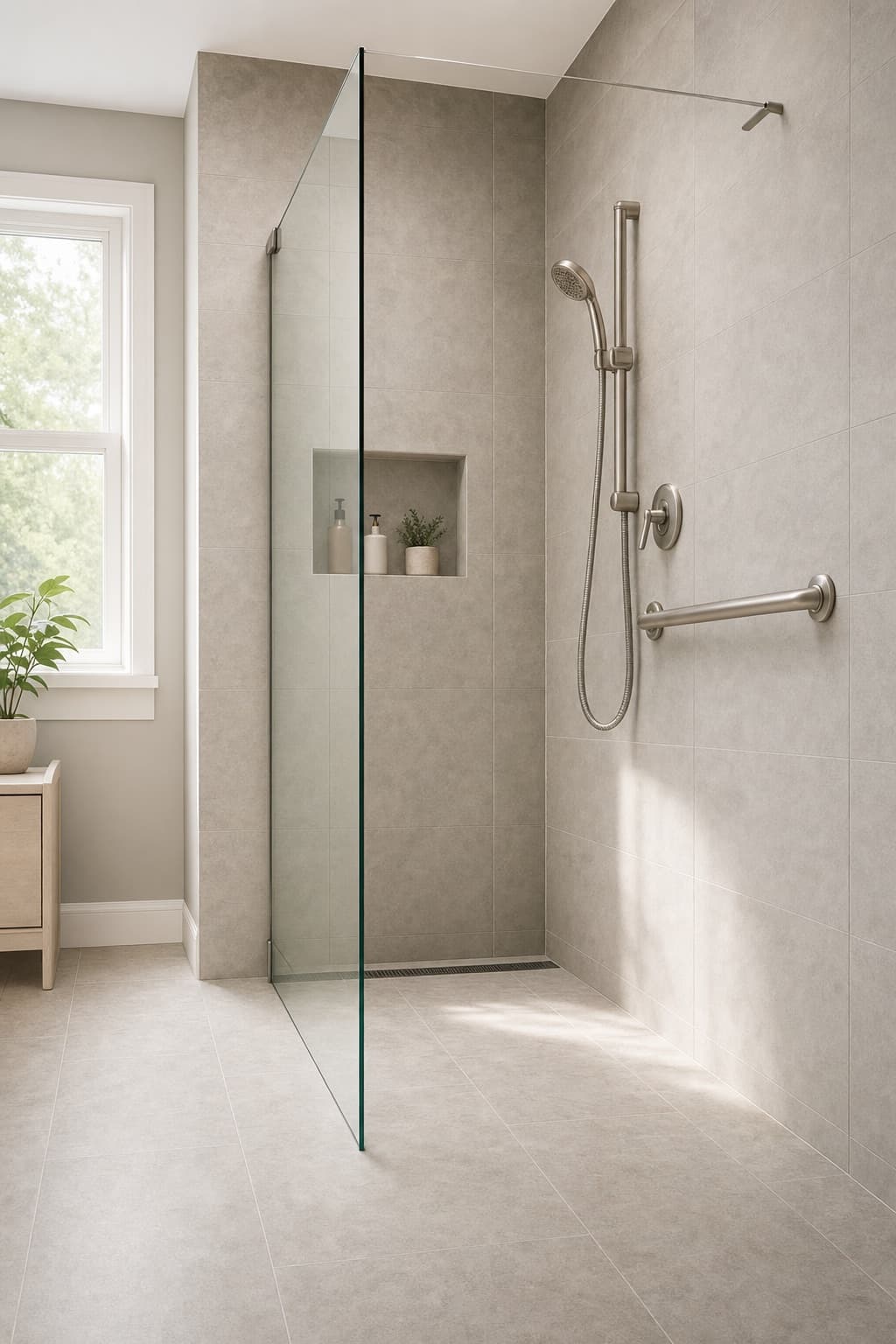
When someone in the house has a disability, or has started to find the bathtub hard, the shower usually becomes the first project. Searching for a solution turns up shower units, chairs, bars and kits sold as accessible. Very little of that tells you what the shower in your own bathroom actually needs. The answer is a short list, and it depends on the person more than on any product.
Start with how the person moves
Someone who walks with a cane needs something different from someone who uses a walker, and both need something different from someone who arrives in a wheelchair or a shower chair and is helped by a carer. Before anything is drawn, the first questions are how the person gets to the bathroom today, whether they stand or sit to wash, whether anyone helps, and how that is likely to change. A shower designed for the person as they are now, with room for how they may be in a few years, is the one that lasts.
A level entrance
The single biggest change is removing the step. A tub wall or a raised curb has to be stepped over, and for many people that step is the whole difficulty. A curbless shower puts the shower floor at the level of the bathroom floor, with the slope to the drain built into the structure. How that is done, and why it is a building job rather than a product, is set out in the article on the curbless floor.
Room inside and in front
A shower that is technically step free but too shallow to turn in, or too narrow for a chair, does not solve much. The space in front of the shower matters as much as the space inside, because that is where someone transfers, turns a walker or stands to help. The dimensions that decide this are covered in the article on bathroom dimensions, and they are measured in the room before any layout is proposed.
Something solid to hold
Grab bars are only as good as what they are fixed to. A bar screwed into tile and drywall alone can pull out under a sudden load. Bars belong in solid blocking or in anchors rated for the wall behind them, placed where a hand naturally goes when stepping in, turning and sitting down. Towel rails, soap dishes and glass doors are not bars and should never be used as one.
A place to sit
Many people who stand to shower today will want to sit later, and some need to sit now. A folding seat fixed to a reinforced wall, a built in bench, or space left clear for a freestanding shower chair are the three options. A fixed seat needs the wall prepared for it during the build. A portable chair needs a floor flat enough for its legs to sit evenly, which a curbless floor with a single slope provides better than a funnel shaped one.
Controls within reach
The valve should be reachable from the seat and from outside the spray, so the water can be started and warmed before stepping in. A handheld shower on a slide bar lets someone seated wash without the water falling on their head, and lets a carer direct the water without getting soaked. A temperature limiting valve is worth discussing with the installer for anyone who may not react quickly to hot water.
What it is not
An accessible shower is not defined by a sticker on a shower unit. Standards written for public buildings describe dimensions and fittings for strangers in commercial spaces. In a private home, the person who will use the shower is known, and the design should fit them. No single model answers it; the shower has to be built for the room and the person.
Where to begin
The usual sequence is to remove the tub or the old shower, rebuild the floor so the entrance is level, block the walls for bars and a seat, then waterproof and tile. The accessible shower conversion page describes that work, and the factors that decide its scope are on the cost factors page. Describe the bathroom and who uses it in a free quote request, and a qualified local pro can tell you what it needs.
Start from the person, not the catalogue
Tell us who will use the shower and what they find difficult today. That is where the quote should start, and where the design starts too.